
How to Build a Unique Wardrobe: Your 2026 Guide

Table of Contents
- Why a Unique Wardrobe Beats a Generic One
- How to Build a Wardrobe from Scratch: The Closet Audit
- How to Build a Capsule Wardrobe Without Looking Boring
- Building a Unique Capsule Wardrobe: The Foundation Pieces
- How to Create Versatile Streetwear Outfits That Stand Out
- Fit, Tailoring, and Making Pieces Work for Your Body
- Budget, Intentional Shopping, and Caring for Your Wardrobe
- Conclusion: Your Wardrobe, Your Rules
- Frequently Asked Questions
Last Updated: October 4, 2026
Why a Unique Wardrobe Beats a Generic One
A unique wardrobe is clothing chosen around your own taste, body, and daily life rather than whatever a trend cycle pushes at you.
Generic wardrobes are expensive: you keep replacing the same mediocre basics and still feel like you have nothing to wear.
This guide from You're Boring walks through the full process: auditing what you own, spotting the gaps, choosing a palette, and buying deliberately, a repeatable method, not a one-time closet clean-out.
How to Build a Wardrobe from Scratch: The Closet Audit
Building from scratch starts with subtraction, not shopping. Empty your closet onto the bed, try things on, and sort honestly, the step most people skip, and the reason their wardrobes never come together.
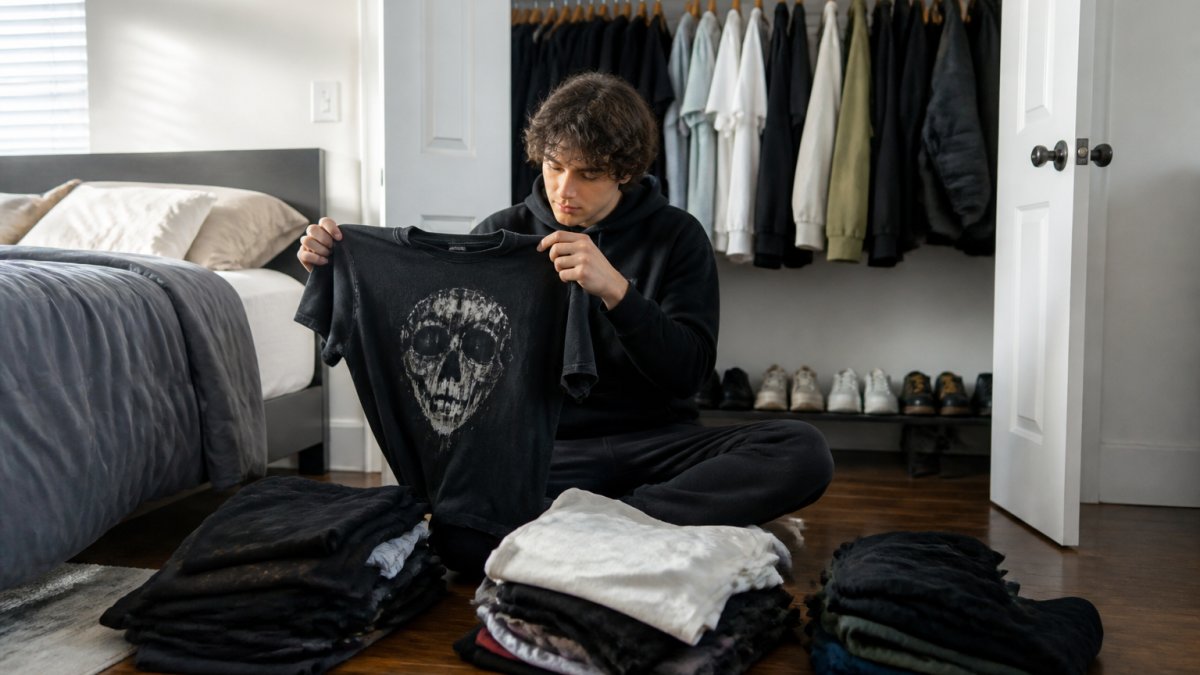
Most guides stop at "make three piles." What follows survives contact with a real closet: a repeatable decision tree, a timeline, and rules for the pieces that make you hesitate.
The Keep, Tailor, Donate, Replace Framework
Instead of three piles, use four outcomes. Every piece gets exactly one.
- Keep: It fits now, you wore it in the last 12 months, and it works with at least two other things you own. Put it back on the rack facing the same direction so you can see what you actually have.
- Tailor: It fits in the shoulders or chest but fails somewhere fixable, hem too long, waist too loose, sleeves too wide. These go in a bag by the door, not back in the closet. If you haven't dropped them at a tailor within two weeks, they become Donate.
- Donate: It doesn't fit, it's worn out, or you haven't touched it in a year. This includes the aspirational pieces, the jeans from three sizes ago, the jacket for a version of your life you don't actually live.
Keeping things "for when they fit again" is a common mistake. That pile isn't a wardrobe, it's a storage unit, space a piece that serves you today could fill.
The 30-Day Maybe Bag (and Why It Works)
Everything you're emotionally attached to but can't justify goes in a dated bag, stored somewhere inconvenient, the top shelf, the garage, a friend's spare room. Revisit in 30 days.
The rule: if you haven't reached for it in 30 days, you won't. Donate the bag unopened. The point isn't punishment, it's proving the attachment was to the memory, not the garment.
Spotting Your Wardrobe Gaps
Gaps reveal themselves through outfits you almost wore. Think back to the last month: what did you want to wear but couldn't because one piece was missing? A plain layer under a graphic tee? A jacket over a hoodie? A shoe that isn't a sneaker?
Write those missing pieces down. That list, not a trend report, is your shopping list.
A Realistic Timeline
A full audit is a two-evening job. Evening one: pull everything out, try on the pieces you're unsure about, and build the four piles. Evening two: photograph the Keep pile, log the Replace list, and drop the Tailor bag off. One sitting is why most audits end with a half-sorted floor and a closed door.
How to Build a Capsule Wardrobe Without Looking Boring
A capsule wardrobe is a small set of versatile clothing that mixes into many outfit combinations. The boring version comes from a generic checklist, white tee, blue jeans, navy blazer.
The fix isn't a better checklist but a repeatable method for injecting your own references into a small set of pieces, so the capsule stays tight while reading as unmistakably yours.
Picking Your Color Palette and Signature Style
Choose two neutral colors and two accent colors. Neutrals do the heavy lifting; accents carry your personality. Love bold graphics? Keep the base neutral so the print talks. Darker taste? Build on black and charcoal with one loud accent.
Your signature style is whatever you'd wear if nobody was watching. Start there. Then repeat it until people recognize it as yours.
| Wardrobe Layer | Purpose | Example Pieces |
|---|---|---|
| Base layer | Everyday comfort, easy layering | Plain tees, long sleeve tees |
| Mid layer | Adds structure and warmth | Hoodies, overshirts |
| Statement piece | Carries your personality | Graphic prints, bold cuts |
| Anchor bottoms | Ties outfits together | Dark denim, black trousers |
The Uniqueness Layer: Four Levers You Can Pull
A capsule becomes unique when you vary it along four axes. Most people only vary color; pull all four and the same small wardrobe reads as distinctly yours.
- Silhouette. Vary the shape, not just the color. A boxy tee, a regular tee, and an oversized tee in the same color are three different garments. A cropped hoodie and a longline hoodie do different work. Silhouette is the fastest way to make a capsule feel personal without buying more.
- Texture and weight. A 230 gsm cotton tee and a 360 gsm washed hoodie read completely differently even in the same palette. Mixing weights, a light long sleeve under a heavy overshirt, creates depth that flat, uniform-weight capsules lack.
- Reference. Pick one or two cultural references that mean something to you, a subculture, a decade, a city, a sport, a film, and let them show up in small, consistent ways. One reference repeated across a few pieces reads as a signature; five scattered across twenty reads as a costume rack.
- Accessory as signature. One recurring accessory, a specific chain, a cap shape, a bag, a pair of shoes, does more for uniqueness than any single garment. It's the cheapest lever and the most recognizable.
The Three-Outfit Test
Before committing to a palette or reference, run the three-outfit test: build three complete outfits from what you own plus the pieces you're considering. All three feel like you? The direction is right. One feels like a costume?
It takes twenty minutes, saves months of misdirected shopping, and reveals whether a piece you love in isolation actually works in your wardrobe.
Building a Unique Capsule Wardrobe: The Foundation Pieces
Foundation pieces are the garments every outfit gets built on.
Start with a small set:
- Two or three plain tees in your neutral colors, in a fit you actually like
- One heavyweight or oversized tee for days you want volume
- One long sleeve tee for layering under short sleeves
Our Unisex Sorona Crewneck T-Shirt is the kind of base we'd build around: a regular fit with a classic H-line silhouette and a ribbed collar that keeps its shape.
For cooler months, a structured layer changes everything. The Unisex Boxy Vintage Washed Hoodie has a boxy silhouette, drop shoulders, and a washed finish that reads worn-in rather than brand new.
How to Create Versatile Streetwear Outfits That Stand Out
Versatile streetwear outfits come from layering, proportion, and one deliberate focal point. The pieces stay simple; the combinations do the work. This is where a capsule stops feeling small.
Three outfit formulas that work with the foundation above:
- Base plus statement: plain tee, anchor bottoms, one bold printed piece on top or as the tee itself.
- Layered volume: long sleeve tee under a boxy hoodie, with slim bottoms to balance the top.
- Tonal with one break: head-to-toe in one neutral, broken by a single accent piece, like a bright shoe or a printed layer.
None of these need new clothes, they need pieces that fit together. That's the whole argument for building around a palette instead of buying on impulse.
The trick most people miss: photograph your outfits.
Fit, Tailoring, and Making Pieces Work for Your Body
Fit is the difference between a piece looking intentional and looking borrowed. A cheap garment that fits well beats an expensive one that doesn't, every time. A wardrobe should be built from what fits you, not what a size chart assumes.
Three things to check on every piece:
- Shoulders: The seam should sit at or just past your natural shoulder line. Drop shoulders are a deliberate style choice; a seam that lands halfway down your arm by accident is not.
- Length: A tee should hit somewhere between your hip bone and mid-fly. Anything shorter rides up when you raise your arms.
- Volume balance: If the top is oversized, keep the bottom slimmer. If the bottom is wide, keep the top closer to the body.
Simple tailoring is worth the cost: hemming trousers and taking in a waistband transforms how a piece reads, and a local tailor can do it quickly.
Budget, Intentional Shopping, and Caring for Your Wardrobe
A wardrobe budget works best split into planned purchases and a small reserve.
A simple split to start with:
- 70% planned: the gaps you identified in your audit
- 20% replacement: worn-out basics that need swapping
- 10% wildcard: the piece that's just yours
Intentional shopping means one rule: if it doesn't work with at least three things you already own, it doesn't come home. That single filter prevents most impulse buys.
Care keeps the investment alive. Follow each care label: most cotton knits do best washed cold on a gentle cycle, dried low, and ironed at low heat with the print avoided.
A wardrobe that lasts is a wardrobe you actually wear.
Conclusion: Your Wardrobe, Your Rules
The hard part isn't finding clothes, it's resisting the noise long enough to build something actually yours. Trends keep cycling; your taste won't move that fast.
That's the gap we built You're Boring to fill. Our premium streetwear is made for people who'd rather wear their personality than blend in, with heavyweight cotton knits, structured hoodies, and pieces designed as canvases for bold design.
Get started with You're Boring and build a wardrobe that sounds like you, not like everyone else.
Frequently Asked Questions
What is the 3-3-3 rule for wardrobe?
The 3-3-3 rule is a packing and wardrobe-building guideline: three tops, three bottoms, and three pairs of shoes that can be mixed into nine different outfits. It's not a strict formula for a full wardrobe, but it's useful for testing whether your pieces actually work together. If you can't make at least nine outfit combinations from those nine items, you have pieces that don't earn their space.
How do you build a wardrobe from scratch without spending a fortune?
Start with a closet audit to identify what you actually wear and what's missing. Then build around versatile basics that mix and match: neutral tees, a quality hoodie, and one or two statement pieces. You don't need to buy everything at once. Add one intentional piece per month and focus on quality over quantity. A heavyweight cotton tee at 230 gsm or higher will outlast three cheap ones.
How can I make basic outfits look more unique?
Layer textures and silhouettes rather than relying on loud prints. A vintage-washed boxy hoodie over a slim-fit tee creates contrast. Swap standard denim for wide-leg trousers. Add one conversation-starting piece per outfit, like a graphic tee with a design that means something to you. The key is contrast: if your top is oversized, go fitted on the bottom, and vice versa.
How many pieces should a versatile wardrobe have?
There's no magic number, but most people find 30 to 40 pieces (excluding underwear and socks) covers everyday wear, work, and social occasions. The goal isn't hitting a count. It's making sure every piece works with at least three others. If you can create 15 or more outfit combinations from what you own, your wardrobe is doing its job.
How do I choose statement pieces I'll actually wear often?
Test every statement piece against three outfits you already own. If it doesn't work with at least three, leave it. Look for pieces with a neutral base and one bold element, like a washed hoodie with a distinctive cut or a graphic tee with a design that fits your personal expression. Statement pieces should feel like an extension of your personality, not a costume.
How can I build a unique wardrobe on a budget?
Focus on foundation pieces first: tees, hoodies, and trousers in neutral colors that mix and match easily. Buy fewer, better items. A 280 gsm heavyweight tee at around $26 outperforms three $10 tees that lose shape after a month. Shop your closet before buying anything new, and set a monthly cap. Intentional shopping beats impulse buying every time.
Don't be boring.
Hoodies, tees and hats that say what everyone's thinking. Free US shipping over $70.
Shop the drop

