
How to Build a Capsule Streetwear Wardrobe in 2026

Table of Contents
- Start Here: How to Create a Capsule Wardrobe for Streetwear
- The Streetwear Capsule Wardrobe Essentials You Actually Need
- How Many Clothes Should Be in a Capsule Wardrobe?
- Streetwear Outfit Ideas: Mix, Match, and Multiply
- Fit, Sizing, and Proportion: Make Every Piece Work Harder
- Budget Tiers and Cost-per-Wear Planning for Your Capsule
- Conclusion: Build a Capsule Streetwear Rotation That Lasts
- Frequently Asked Questions
Last Updated: October 21, 2026
Start Here: How to Create a Capsule Wardrobe for Streetwear
A capsule wardrobe is a small, edited collection of pieces that all work together, so every item earns its place. Building a capsule streetwear rotation starts with one rule: fewer pieces, chosen harder, worn more often.
Most people own too much and wear too little. A capsule flips that: keep the pieces that fit right, match everything else, and survive repeated washes.
Capsule streetwear removes daily decision fatigue so your best pieces actually get worn.
Here is the build process we recommend, in order:
- Define your personal style in three words
- Audit what you already own
- Pick a color palette of two neutrals plus one accent
- Choose your core tops, bottoms, and outer layer
- Add footwear, headwear, and accessories
- Test every piece in at least three outfits before you buy
- Rebuild seasonally, not monthly
The Streetwear Capsule Wardrobe Essentials You Actually Need
A working capsule needs 8 to 12 core pieces, each pairing with at least three others.
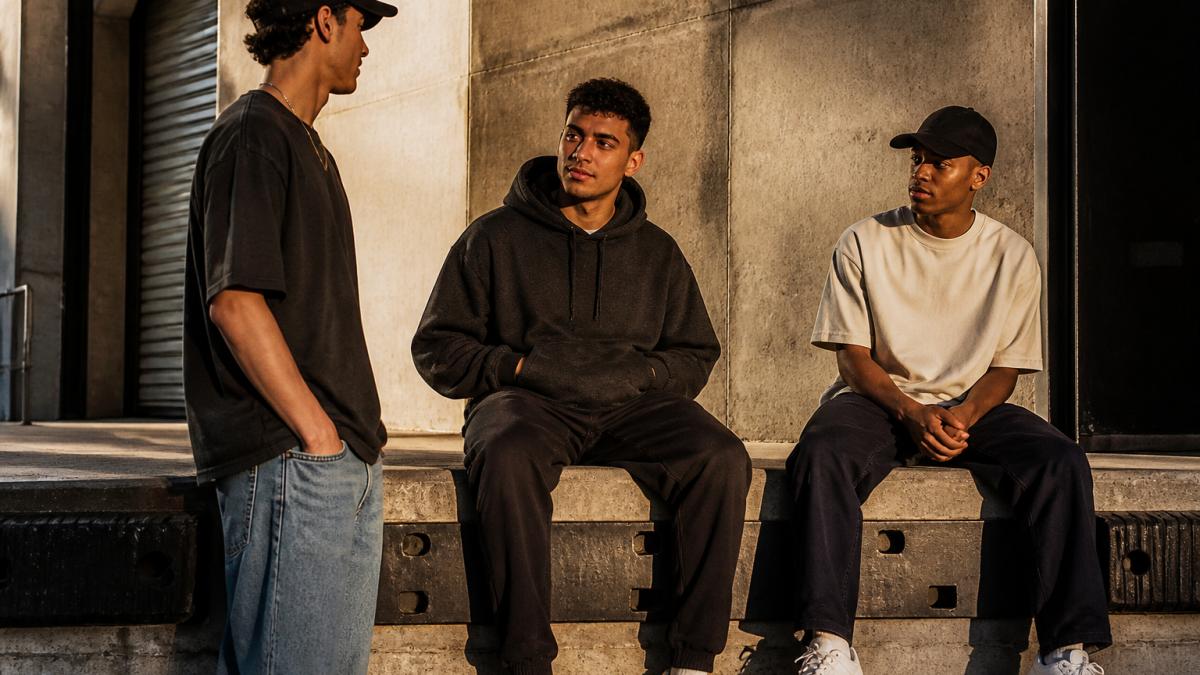
Tops, Bottoms, and Outerwear That Do the Work
Start with fabric weight. Our Essential Cotton T-Shirt uses 260 gsm cotton in an oversized cut.

Your core tops should cover:
- Two heavyweight tees in neutral colors
- One long sleeve for layering
- One hoodie or sweatshirt as your mid layer
For bottoms, pick two: relaxed joggers and a straight-leg denim. Both should sit at the same waist height so tops work with either.

Our Unisex Boxy Vintage Washed Hoodie is a good example of a piece that does double duty, thanks to its boxy cut and 360 gsm cotton knit.

Footwear, Headwear, and Accessories That Finish the Fit
Footwear carries more weight in streetwear than any other item. Two pairs cover almost everything: one clean low-profile sneaker and one chunkier option, both in neutral tones.
Headwear and accessories are where personality enters. A structured flat-brim cap like our Graffiti Mad Face Blue adds shape to an outfit that would otherwise read flat. One cap, one beanie, one bag, one chain is enough.
How Many Clothes Should Be in a Capsule Wardrobe?
A streetwear capsule usually holds 15 to 25 items total, including shoes and accessories, enough for a full rotation without repeats, with room for one or two statement pieces.
Break it down like this:
| Category | Suggested Count | Notes |
|---|---|---|
| Tops | 5-7 | Mix tees, long sleeves, one hoodie |
| Bottoms | 3-4 | Joggers, denim, one short option |
| Outer layer | 1-2 | Climate dependent |
| Footwear | 2 | One clean, one chunky |
| Headwear and accessories | 3-4 | Cap, beanie, bag, one chain |
The count matters less than the ratio. If your tops outnumber your bottoms three to one, you will still feel like you have nothing to wear. Keep the categories roughly balanced.
Streetwear Outfit Ideas: Mix, Match, and Multiply
The whole point of a capsule is outfit combinations. Ten well-chosen pieces can produce 30 or more looks, and the trick is a simple pairing matrix.
To build one, list your tops down the side and bottoms across the top, mark every pairing you would actually wear, then repeat for outer layers and shoes.
| Top | Joggers | Straight Denim | Shorts |
|---|---|---|---|
| Heavyweight tee | Yes | Yes | Yes |
| Long sleeve | Yes | Yes | No |
| Hoodie (layered) | Yes | Yes | No |
| Graphic tee | Yes | Yes | Yes |
Any top with three ticks is doing real work. Any top with one tick is dead weight, and you should question why you own it.
The Outfit Matrix: From 10 Pieces to 30+ Looks
A pairing matrix tells you which items work together; an outfit matrix tells you what to actually wear. Build a second grid with full outfits as rows and occasion or weather as columns. Here is an example using a 10-piece capsule (4 tops, 3 bottoms, 2 shoes, 1 outer layer):
| Outfit | Mild / Dry | Cold / Layered | Warm / Casual |
|---|---|---|---|
| Heavyweight tee + straight denim + clean sneakers + cap | Yes | Add hoodie | Yes |
| Long sleeve + joggers + chunky shoes | Yes | Add outer layer | No |
| Graphic tee + shorts + clean sneakers | Yes | No | Yes |
| Hoodie + straight denim + chunky shoes | Yes | Yes | No |
| Long sleeve under hoodie + joggers + clean sneakers | Yes | Yes | No |
| Heavyweight tee + joggers + chunky shoes + beanie | Yes | Add outer layer | Yes |
Count the ticks: this 10-piece capsule produces at least 18 distinct outfit combinations before accessories. Add a cap, beanie, and bag and the same pieces stretch past 30 looks.
Complete Outfit Formulas by Occasion
A few combinations that always land:
- Everyday errands: Heavyweight tee plus straight denim plus clean sneakers plus cap. The tee's structure keeps the fit from reading sloppy.
- Cold-weather layering: Long sleeve under a boxy hoodie plus joggers plus chunky shoes. The long sleeve adds warmth without bulk.
- Warm-weather casual: Graphic tee plus shorts plus clean sneakers. Keep the shorts hem above the knee and the tee hem at the hip.
How to Test a New Piece Before You Buy
Before any purchase, run the piece through this three-outfit test:
- Name three existing items in your capsule it pairs with.
- Name one occasion or weather condition where you would wear it.
- Name one outfit formula above it slots into without changes.
If you cannot answer all three, the piece is not capsule material. The test turns "I like this" into "this works with what I own."
Fit, Sizing, and Proportion: Make Every Piece Work Harder
Fit is the difference between streetwear and a baggy shirt. The rule: one oversized element per outfit, not three. If your top is boxy, keep the bottom straighter; if your pants are wide, keep the top closer to the body.
That rule only works if you understand the three levers behind it: drop shoulder, hem length, and rise.
The Three Proportion Levers in Streetwear
1. Shoulder drop. A drop shoulder means the seam sits past your natural shoulder line. A small drop (1-2 inches) reads relaxed; a large drop (3+ inches) reads deliberately oversized.
2. Hem length. A tee hem at the hip or just below keeps the leg line long; mid-thigh cuts the body in half.
3. Rise. A mid-to-high rise keeps the waistband at your natural waist and lets a cropped or tucked top sit cleanly.
Layering Without Bulk
The layering rule in a capsule is thin under thick. A long sleeve under a hoodie works because the under-layer is closer to the body; a hoodie under a jacket works because the hoodie is the mid layer.
A practical layering order for streetwear:
- Base: heavyweight tee or long sleeve (closer fit)
- Mid: hoodie or sweatshirt (boxy or relaxed)
- Outer: jacket or overshirt (structured or straight)
Keep at most one oversized element per layer stack. If the hoodie is boxy, the jacket should be straighter. If the jacket is oversized, the hoodie underneath should be closer to the body.
Check These Before Anything Else
- Shoulder seam sits where your shoulder actually ends, or just past it
- Hem length lands at the hip or just below, not mid-thigh
- Sleeve ends at the wrist bone for long sleeves
Measure a piece you already love and compare it to the size chart before ordering. Our Oversized Unisex Long Sleeve T-Shirt lists full chest and length measurements per size for exactly this reason.
Adapting Proportions to Body Type and Height
Proportion rules are not one-size-fits-all. A few adjustments that make the same capsule work across body types:
- Shorter frames: Keep hems at the hip and avoid mid-thigh hoodies. A slightly cropped or hip-length top with a straight-leg bottom lengthens the leg line. Avoid stacking oversized top over oversized bottom.
- Taller frames: You can carry a larger shoulder drop and a longer hem without losing proportion. Use a longer tee or hoodie to balance a wider bottom.
- Broader shoulders: A drop shoulder exaggerates width. If that is not the goal, choose a set-in sleeve or a smaller drop and let the bottom carry the volume.
Budget Tiers and Cost-per-Wear Planning for Your Capsule
Cost per wear is the only price metric that matters.
Work out your tier before you shop:
| Tier | Approach | What to Prioritize |
|---|---|---|
| Starter | Rebuild slowly, one piece per month | Tops and one good pair of bottoms |
| Mid | Replace weak items, add footwear | Outerwear and a second shoe |
| Full | Refine palette, add statement pieces | One bold piece per season |
Two habits keep the budget honest: buy base pieces at the highest quality you can afford, since they take the most wear, and let statement pieces carry the personality.
A common mistake is spending the whole budget on one loud item and then having nothing to wear it with. Buy the plain pieces first, then the loud one.
Conclusion: Build a Capsule Streetwear Rotation That Lasts
The hard part is not buying clothes. It is trusting that a small, well-chosen rotation beats a full closet, and sticking with it long enough to prove it.
At You're Boring, we build premium streetwear for people who want their clothes to say something. Our heavyweight cotton tees, boxy washed hoodies, and structured caps are made to slot into a capsule and stay there.
Get started with You're Boring and put together a rotation you actually wear.
Frequently Asked Questions
What is the 3-3-3 rule for a capsule streetwear wardrobe?
The 3-3-3 rule means choosing three tops, three bottoms, and three pairs of shoes that all work together. That gives you 27 possible outfit combinations from just nine items. For streetwear, pick pieces like an oversized heavyweight T-shirt, a boxy hoodie, and a long-sleeve tee for tops; relaxed joggers, straight-leg denim, and cargos for bottoms; and clean sneakers, chunky trainers, and a neutral boot for footwear. The rule keeps your capsule small but flexible, so you can mix and match without thinking too hard.
How many items should a capsule streetwear wardrobe have?
Most streetwear capsules work well with 20 to 30 items total, including tops, bottoms, outerwear, footwear, and accessories. That count gives you enough variety for different weather and social settings without overwhelming your closet. If you are just starting, aim for 15 to 20 pieces and add as you notice gaps. The exact number matters less than making sure every piece pairs with at least three others. A tight capsule of 20 versatile items beats a closet of 60 that never get worn.
Can a capsule wardrobe include statement pieces?
Yes, and it should. A capsule streetwear wardrobe without personality is just a uniform. The trick is to limit statement pieces to two or three items, like a graphic tee or a bold flat-brim cap, and build the rest of the capsule around neutral colors and versatile basics. That way your statement pieces have something to anchor to. When you build a capsule streetwear rotation, keep roughly 80% neutral and 20% expressive so the bold items get worn instead of sitting in the closet.
How do you make streetwear outfits more versatile?
Stick to a tight color palette, usually two or three neutrals plus one accent, and choose pieces with a relaxed, modular fit. An oversized heavyweight T-shirt can be worn alone, under a hoodie, or layered with a long-sleeve tee. A boxy hoodie pairs with joggers, denim, or shorts. The more your tops and bottoms share colors and proportions, the more streetwear outfit ideas you can create from the same few pieces. Avoid overly specific graphics or cuts that only work with one look.
Don't be boring.
Hoodies, tees and hats that say what everyone's thinking. Free US shipping over $70.
Shop the drop

