
Why Independent Streetwear Lasts Longer

Table of Contents
- Why Independent Streetwear Lasts Longer: The Real Difference
- Durable Streetwear Materials: What Independent Brands Choose
- Streetwear Garment Construction: Where Quality Shows
- Printing Techniques and Graphic Durability
- How to Make Hoodies Last Longer: Care and Storage
- How Long Should a Quality Hoodie Last
- Repairability and Cost Per Wear
- Independent vs. Mass-Market: Why the Gap Exists
- Frequently Asked Questions
Last Updated: October 11, 2026
Why Independent Streetwear Lasts Longer: The Real Difference
Independent streetwear lasts longer because smaller brands prioritize material quality and construction detail in ways mass-market manufacturers don't. The difference comes down to three core factors: the fabric itself, how it's assembled, and how it's finished. Mass-market brands cut corners on all three to hit price targets. Independent brands compete on durability instead, that's their entire business model.
At You're Boring, we've built our collection around this principle. Premium materials, tight construction, and intentional design choices mean your pieces hold up. Here's what actually separates streetwear that lasts from streetwear that doesn't.
Durable Streetwear Materials: What Independent Brands Choose
Independent brands buy smaller quantities at higher per-unit costs, creating incentive to choose materials that perform.
Fabric Weight and Fiber Composition
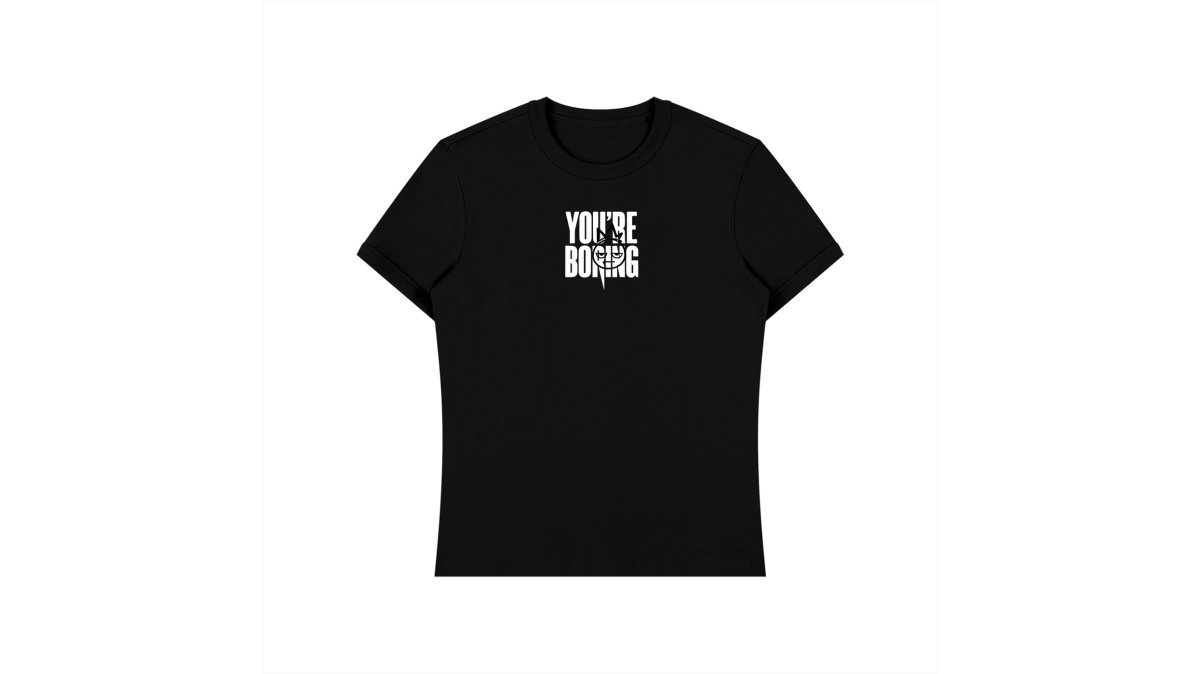
Heavier fabric simply lasts longer. A 280 gsm t-shirt (like our Unisex Heavyweight Slim Fit T-Shirt) feels substantial because there's more fiber per square inch. A 90% cotton, 10% spandex blend gives you durability plus stretch without sacrificing longevity.
Mass-market brands use cheap polyester or low-quality blends that pill within weeks. Independent makers specify fibers because their reputation depends on durability.
Natural vs. Synthetic Blends
Cotton breathes, softens with washing, and lasts longer than synthetics, which degrade under heat and UV. Natural fibers cost more, but independent brands accept that trade-off; mass producers don't.
Streetwear Garment Construction: Where Quality Shows
How a garment is sewn determines how long it survives real life. A t-shirt can have perfect fabric and still fall apart if the seams are weak.

Seam Strength and Stitching Density
Dense stitching spreads stress across more thread, preventing catastrophic seam failure.
Look at the seams on our Unisex Boxy Vintage Washed Hoodie. The stitching is tight and even. That consistency signals quality control.
Finishing Details That Prevent Unraveling
Ribbed cuffs distribute stress and hold edges together.
Printing Techniques and Graphic Durability
A graphic can outlast the garment it's printed on, or it can crack and fade after five washes. The difference is the printing method.
Water-Based Ink vs. Screen Printing
Direct-to-garment printing with water-based inks is the durability standard.
Colorfastness and Fade Resistance
Quality independent brands use garment dyes that saturate fibers evenly after assembly, making color structural. Mass-market brands use cheaper dyes that fade within 10 washes.
How to Make Hoodies Last Longer: Care and Storage
Even quality garments fail if you abuse them. Before you buy, you need to know how to assess whether a hoodie will survive your actual care routine.
Pre-Purchase Quality Checks: What to Look For
Fabric Weight and Feel Test A quality independent hoodie (360-400 gsm) should feel substantial; lightweight mass-market hoodies (220-280 gsm) feel thin. Squeeze the fabric, if it compresses easily and springs back slowly, the fibers are weak.
Seam Inspection Turn the hoodie inside out and examine seams on shoulders, armholes, and side panels.
Cuff and Hem Durability Quality ribbing should feel thick and structured; thin, floppy ribbing will stretch and unravel. Check that ribbing is sewn with tight, continuous stitches.
Graphic Durability Test Run your fingernail across the graphic. Bend gently, cracks or white stress lines indicate brittle ink that will fail within 10-20 washes.
Label and Care Instructions Read the fiber content and care label. Durable hoodies should tolerate machine washing at 30°C.
Washing and Drying Best Practices
Temperature and Cycle Selection Machine wash at 30°C on a gentle cycle. Hot water breaks down fibers and leaches dyes; gentle cycles reduce stress on seams.
Detergent and Additives Use mild detergent for delicates or colors. Avoid bleach and fabric softeners, which damage fibers and reduce absorbency.
Pre-Wash Preparation Turn inside out to protect graphics. Close zippers and toggles to prevent snagging. Wash with similar colors to prevent dye transfer.
Drying Method Air dry whenever possible, hang on a padded hanger or lay flat. Air drying preserves elastic and prevents shrinkage. If using a dryer, use low heat and remove while slightly damp.
Storage and Seasonal Care
Folding vs. Hanging Fold hoodies instead of hanging them, which stretches shoulders over time. Fold lengthwise, then in thirds.
Unisex Heavyweight Slim Fit T-Shirt →
Environmental Conditions Store in a cool (15-20°C), dry place with 40-60% humidity. Moisture encourages mildew and mold. A closet is ideal.
UV and Light Exposure Keep away from direct sunlight, which fades dyes and weakens fibers. Store in opaque containers or back of closet.
Seasonal Rotation Rotate between 2-3 hoodies to extend life by 30-50%. Daily wear accelerates seam and fiber degradation.
| Care Practice | Impact on Longevity | Frequency |
|---|---|---|
| Wash at 30°C on gentle cycle | Preserves fibers and dye | Every 3-5 wears |
| Turn inside out before washing | Protects graphics and surface | Every wash |
| Air dry or low-heat tumble | Prevents shrinkage and elastic degradation | Every wash |
| Fold instead of hang | Prevents shoulder stretching | When storing |
| Store in cool, dry place (15-20°C) | Prevents mildew and fiber breakdown | Always |
| Keep away from direct sunlight | Prevents UV fading and fiber weakening | Always |
| Rotate between multiple hoodies | Reduces wear on individual pieces | Every 2-3 wears |
Spot Cleaning and Quick Maintenance
For minor stains, spot clean with mild detergent and cool water, then air dry. This extends time between full washes. For pilling, use a fabric comb; pilling after 5-10 washes indicates poor fabric quality.
How Long Should a Quality Hoodie Last
A quality hoodie should last 3-5 years with proper care (2-3 wears per week). Heavyweight hoodies (360-400 gsm) outlast lightweight ones because there's more material. Water-based graphics stay vibrant; poorly printed ones fade after 20-30 washes.
Repairability and Cost Per Wear
A $68 hoodie that lasts 5 years costs $2.74 per wear (assuming 50 wears per year). A $25 hoodie that lasts 1 year costs $4.80 per wear. Quality independent streetwear is actually cheaper over time because it lasts longer.
How Construction Quality Determines Repairability
Repairability depends on construction. Weak seams and thin fabric can't be economically repaired; strong seams and dense fabric can be repaired multiple times.
Seam Strength and Repair Viability When a seam splits, a tailor can re-stitch it if surrounding fabric is intact.
Fabric Density and Patch Repairs A tailor can patch holes if surrounding fabric is strong enough.
Elastic and Ribbing Replacement
Calculating True Cost Per Wear
- Quality independent hoodie: $68 ÷ 300 wears = $0.23 per wear
- Mass-market hoodie: $25 ÷ 75 wears = $0.33 per wear
If a quality hoodie lasts 5 years instead of 1 year, you're avoiding 4 years of replacement purchases. That's 4 × $25 = $100 in avoided spending, even if the quality hoodie costs $68. The quality hoodie pays for itself in year 2.
How to Identify Brands That Stand Behind Their Pieces
Look for brands offering transparent production information. These signal confidence in construction and commitment to longevity.
The Repairability Advantage of Independent Brands
Independent brands can afford to design for repairability because they're not racing to the bottom on price. They use wider seam allowances, denser fabrics, and quality ribbing.
Mass-market brands optimize for initial sale price, not long-term value. By the time a mass-market hoodie needs repair, it's cheaper to buy a new one. A quality independent hoodie can be altered and cared for. It becomes a long-term investment instead of a consumable. That's why independent streetwear lasts longer, not just because the materials are better, but because the entire design philosophy is built around longevity.
Independent vs. Mass-Market: Why the Gap Exists
Mass-market brands optimize for margin. They hit a price point and work backward to figure out what materials and construction methods they can afford. The result is a garment that looks good on the hanger but fails in real life.
Independent brands optimize for reputation. They can't compete on price, so they compete on quality. A bad hoodie destroys an independent brand's credibility immediately. That pressure forces better choices at every step.
The independent brand model also means smaller production runs. Smaller batches allow for tighter quality control. A factory making 100,000 identical hoodies per month can't catch every defect. A brand making 1,000 hoodies per month can.
Distribution also matters. Mass-market brands sell through massive retailers that demand low wholesale prices. That margin squeeze forces cost-cutting. Independent brands sell direct, which means they keep more revenue per garment and can afford better materials.
The gap isn't about factory location or secret techniques. It's about economic incentives. Independent brands survive by making garments that last. Mass-market brands survive by making garments that sell. Those are different goals.
The real cost of cheap streetwear isn't the price tag. It's replacing it every season because the seams failed, the graphic cracked, or the fabric pilled into oblivion. Quality independent streetwear costs more upfront because it's built to outlast the trend. When you're choosing between a $25 hoodie and a $68 one, you're not comparing price. You're comparing how many years you'll actually wear the piece. At You're Boring, we design every hoodie and tee with durability in mind. Premium materials, tight construction, and intentional finishing mean your pieces hold up through real life. Start with our Men's Heavy Hoodie Series One.
Frequently Asked Questions
What makes independent streetwear last longer than fast fashion?
Independent brands invest in heavier fabric weights (typically 300-400 gsm for hoodies versus 150-200 gsm for fast fashion), reinforce seams with double stitching, and use higher-quality cotton or cotton blends. They also limit production runs, which means fewer quality shortcuts. Mass-market brands prioritize cost reduction over longevity, using thinner materials and single-pass stitching that fails faster under wear and tear.
How long should a quality hoodie last with proper care?
A quality hoodie made from durable streetwear materials and solid garment construction should last 3-5 years of regular wear, or longer with careful maintenance. This assumes washing at 30°C on gentle cycles, air-drying, and storing in a dry environment. Independent brands using 360+ gsm cotton and reinforced seams consistently outlast cheaper alternatives, which often show pilling and seam separation within 12-18 months.
How do I know if streetwear will actually be durable before I buy it?
Check the fabric weight (look for 280+ gsm for t-shirts, 360+ gsm for hoodies), inspect photos for double-stitched seams, and verify the fiber content (100% cotton or cotton-dominant blends hold up better). Ask whether the brand uses DTG printing. Independent brands often list these specs openly; if they don't, that's a red flag. You're Boring's hoodies use 400 gsm heavyweight cotton with reinforced construction specifically designed for longevity.
Does how I wash my streetwear really affect how long it lasts?
Yes, significantly. Wash at 30°C on gentle cycles, avoid bleach, and tumble dry on low or air-dry to prevent shrinkage and heat damage. Harsh detergents and high temperatures break down cotton fibers and fade graphics faster. Over-washing also accelerates pilling and seam stress. A hoodie washed correctly every 3-4 wears will last twice as long as one washed after every wear in hot water. Independent brands often include specific care instructions because they expect their pieces to be worn repeatedly.
Don't be boring.
Hoodies, tees and hats that say what everyone's thinking. Free US shipping over $70.
Shop the drop

