7 Steps to Choose the Right Streetwear Size Online

Last Updated: October 26, 2026
Quick Summary
To choose your streetwear size online, measure your chest, waist, hips and shoulder width, then measure a garment you already own flat and compare both to the brand's size chart. Use body measurements for range and garment measurements for fit, and check whether the chart lists body or garment numbers before comparing.
- Measure yourself with a soft tape over light clothing and stick to one unit throughout.
- Lay a favourite garment flat and double the armpit-to-armpit chest measurement.
- Buy your normal size in a piece labelled oversized rather than sizing up in a regular cut.
- Hoodies need four checks: chest width, body length, shoulder width and sleeve length.
- Wash cold and tumble dry low to limit cotton shrinkage and keep your size.
Table of Contents
- Why Your Usual Size Won't Save You When Buying Streetwear Online
- How to Measure Yourself for Online Clothing
- How to Measure a Garment You Already Own
- How to Read a Clothing Size Chart Without Guessing
- Oversized Streetwear Sizing: When to Size Up and When Not To
- Streetwear Hoodie Size Chart: What to Check Before You Order
- Fabric, Shrinkage, and Why Your Size Changes After a Wash
- Pick Your Size and Order With Confidence
- Frequently Asked Questions
Why Your Usual Size Won't Save You When Buying Streetwear Online
Your usual size is a starting point, not an answer.
Here's the core problem. Streetwear labels use terms like oversized, relaxed, and boxy to describe how a garment hangs. Those words mean different things from brand to brand.
So how do you choose a streetwear size online without guessing? You measure yourself, measure a garment you already love, and compare both to the brand's chart.
How to Measure Yourself for Online Clothing
How to measure yourself for online clothing comes down to four numbers taken with a soft tape over light clothing. Stand relaxed, keep the tape level, and don't pull it tight. A friend helps, but you can do it alone in front of a mirror.
Take your time here. Bad measurements cause bad orders.
The Four Measurements That Decide Your Streetwear Size
- Chest or bust: Wrap the tape around the fullest part, under your arms, level across your back.
- Waist: Measure at your natural waistline, the narrowest point above your hip bones.
- Hips: Measure around the fullest part of your seat, feet together.
Write each number down in centimetres or inches, and stick to one unit. Mixing units is a common mistake that throws off every comparison you make afterward.
How to Measure a Garment You Already Own
Measuring a garment you already own is the most reliable sizing check you can do at home. Lay your favourite fitting piece flat on a table, smooth out the wrinkles, and measure across it.
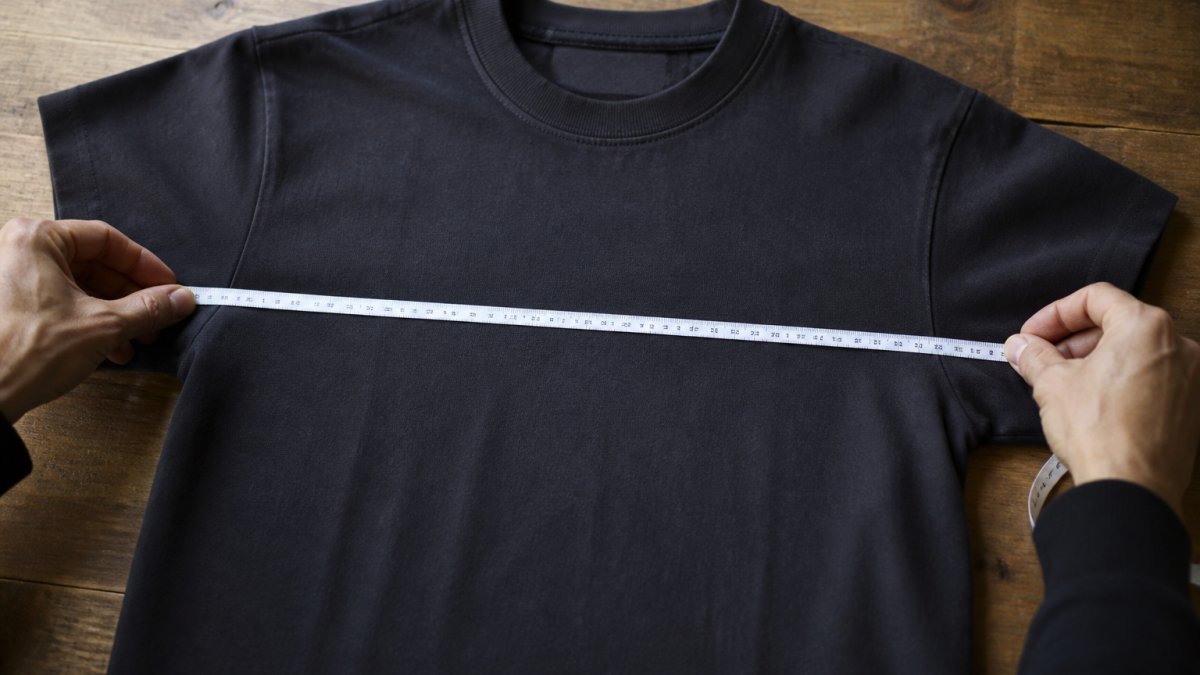
Here's the consistent method:
- Chest: Measure armpit to armpit, then double it.
- Body length: Measure from the high shoulder point straight down to the hem.
- Shoulder: Measure seam to seam across the top of the back.
Measure the same way every time. If you measure one shirt flat and another stretched, your numbers won't compare. Keep a note of your favourite garment's measurements on your phone, and you'll never guess again.
How to Read a Clothing Size Chart Without Guessing
How to read a clothing size chart starts with one question: is this chart listing body measurements or garment measurements? Most charts list one, some list both, and a few list neither clearly. Check the label above the table before you compare anything, because mixing the two is where most sizing errors begin.
A size chart is a reference, not a guarantee. Here is how to read each column type and what to do with it.
| Chart Column | What It Usually Means | How to Use It |
|---|---|---|
| Chest / bust | Body circumference, or garment chest width (often flat, armpit to armpit) | If body: match your measured chest. If garment: compare to your doubled flat measurement |
| Body length | Garment length from high shoulder point to hem | Compare to a top you like the length of, not to your body height |
| Shoulder | Seam-to-seam width across the back | Critical for oversized and drop-shoulder cuts; a wider number means the seam sits down the arm |
| Sleeve | Sleeve length from shoulder seam to cuff | Check against your arm length, and allow extra for ribbed cuffs |
| Waist / hip | Body circumference, or garment flat width | For pants, compare garment waist to a pair that fits you flat, not to your body waist alone |
| Inseam | Garment inseam length | Compare to a pair you own; streetwear pants often run long on purpose |
Body vs. garment: the reconciliation rule
If a chart shows body measurements, compare them to your own body numbers. If it shows garment measurements, compare them to the flat measurements of a piece you own.
A common pattern is that streetwear brands list garment measurements because their cuts are intentionally loose. A size chart that says a medium has a 58 cm chest width is telling you the shirt is boxy, not that your chest is 58 cm.
What to do when the chart is missing or unclear
Not every product page has a full chart. When the chart is missing, look for a product-specific size note, a model's height and size worn, or a linked fit guide.
A consistent garment-measuring habit is what makes any chart readable. Measure your favorite tee, hoodie, and pants flat once, note the numbers, and you can hold any chart against them in seconds.
Oversized Streetwear Sizing: When to Size Up and When Not To
Oversized streetwear sizing is not the same as sizing up. An oversized garment is cut larger on purpose, with a wider chest and dropped shoulders. Sizing up in a regular fit gives you a longer, looser version of a normal shirt, not a true oversized look. The words on the label describe the cut, not your body, and they are not standardized across brands.
Unisex Heavyweight Slim Fit T-Shirt →
The four streetwear silhouettes and what they change
- Oversized: Cut with extra room through the chest and body, often with a dropped shoulder. Buy your normal size in a piece labeled oversized and it will fit relaxed as designed. Size up only if you want an even boxier drape or you are between sizes and prefer room.
- Boxy: Wide through the chest with a shorter body length, so the hem sits near the waist. A boxy tee or hoodie is meant to look square, not long. Check the body length column carefully, because a boxy cut that is too short reads as cropped rather than relaxed.
- Relaxed: A middle ground. More room than a regular fit but less than oversized, with a normal shoulder placement. Relaxed is the safest choice if you want ease without a statement silhouette.
Drop shoulders deserve their own note. When the shoulder seam sits down the arm, the sleeve opening moves with it, so a slightly long sleeve is normal and ribbed cuffs keep it in check. If you size up in a drop-shoulder cut, the sleeves often run past your hands, which reads as borrowed rather than styled.
Fit guidance by garment category
The right amount of ease depends on what you are buying.
- Tees: Chest width and body length decide the look. A boxy tee should have a wide chest and a shorter body; an oversized tee runs wider and longer. Compare both numbers to a tee you own.
- Hoodies: Less stretch and more structure than a tee. Check chest, body length, shoulder, and sleeve. A boxy hoodie will show a wide chest and a shorter body, which is the look, not a mistake.
- Outerwear: Needs room for layers. If you plan to wear a hoodie underneath, compare the jacket's chest width to your hoodie's chest width plus a few centimetres of ease, and check the sleeve length against your arm with the layer on.
When you do size up, think about proportion. A bigger top needs balance below. If you want styling help once you have picked your size, read our guide on how to style an oversized hoodie without looking like you just woke up. You can also check the fit and size range on our oversized unisex long sleeve t-shirt before you commit.
Streetwear Hoodie Size Chart: What to Check Before You Order
A streetwear hoodie size chart matters more than a tee chart because hoodies have less stretch and more structure. Check four things: chest width, body length, shoulder width, and sleeve length.
Here's what to look for on a hoodie chart:
- Chest: A boxy cut runs wide. Compare to a hoodie you already own.
- Body length: Short-length hoodies sit near the waist. Check you're happy with that.
- Shoulder: Drop shoulders push the seam down the arm. Expect a wider number.
You can see these numbers in action on our Unisex Boxy Vintage Washed Hoodie, which lists chest, length, shoulder, and sleeve for every size. Measure a hoodie you love, compare, and pick the size closest to it.
Fabric, Shrinkage, and Why Your Size Changes After a Wash
Fabric and construction decide whether your size holds after a wash. Cotton can shrink, especially with heat. Heavier fabrics tend to keep their shape better than thin ones, and good stitching helps a garment stay true to size over time. Our article on why independent streetwear lasts longer explains how fabric weight and construction hold their size and shape after washing.
A few practical rules:
- Wash cold and tumble dry low to limit shrinkage.
- Avoid high heat, which shrinks cotton and fades prints.
- Heavier cotton knits hold their shape better than light, stretchy ones.
care label guidance from the American Cleaning Institute
Buy for the fit you want, then care for it so it stays that way.
Pick Your Size and Order With Confidence
Picking your size comes down to one habit: measure, compare, then order. Use your body measurements for range, garment measurements for fit, and the size chart to bridge the two. When you're between sizes, size up for a relaxed look and stay true for a closer one.
A quick checklist before you check out:
- Body measurements taken and written down
- Favourite garment measured flat
- Both compared to the brand's size chart
Measure once, and you'll shop with confidence every time. Then browse women's streetwear in your confirmed size.
Frequently Asked Questions
How do you choose the right streetwear size online?
Measure your chest, waist, hips, and shoulder width with a soft tape, then measure a garment that already fits you the way you want. Compare both sets of numbers against the brand's size chart and pick the size that matches your garment measurements, not your body measurements. If you land between two sizes, size up for a relaxed streetwear look or size down for a closer fit.
Should you size up for an oversized streetwear fit?
Only if the garment is cut slim. Oversized streetwear sizing is already built into the pattern, so a boxy hoodie or drop-shoulder tee in your normal size will hang loose without sizing up. Check the chest and shoulder measurements on the size chart: if the chest width is 5-8 cm wider than your body measurement, the fit is already relaxed. Sizing up again usually just adds length you did not want.
How can you tell whether streetwear runs true to size?
Compare the brand's size chart to a garment you own. If the chest width for your usual size sits within 1-2 cm of your favorite tee, it runs true to size. Look for the fabric weight too: heavier cotton knits tend to hold their shape, while lighter fabrics can stretch out. Customer photos help, but check the measurements listed, not just how the piece looks on someone else's frame.
What measurements should you check before buying a hoodie online?
Check chest width, shoulder width, body length, and sleeve length on the streetwear hoodie size chart. Chest and shoulder decide how boxy it sits; body length decides whether it hits your waist or your hips; sleeve length decides whether the cuffs stack or stop short. For a boxy hoodie, the shoulder measurement often runs 10 cm wider than your actual shoulder, which is the drop-shoulder cut doing its job.
Sizing confusion is the fastest way to end up with a return and a bad first impression. Many You're Boring product pages list real garment measurements, so you can compare before you buy. Our boxy hoodies, oversized long sleeves, and heavyweight tees are cut to be worn as designed, with fabric weights and care details listed up front. Get started with You're Boring and order your true size with confidence.

Don't be boring.
Hoodies, tees and hats that say what everyone's thinking. Free US shipping over $70.
Shop the drop

